
Teaching the habits that prevent the next rescue
Responsible pet ownership is a set of ordinary habits, not a moral position. Where those habits are normal, our rescue teams have far less to do.
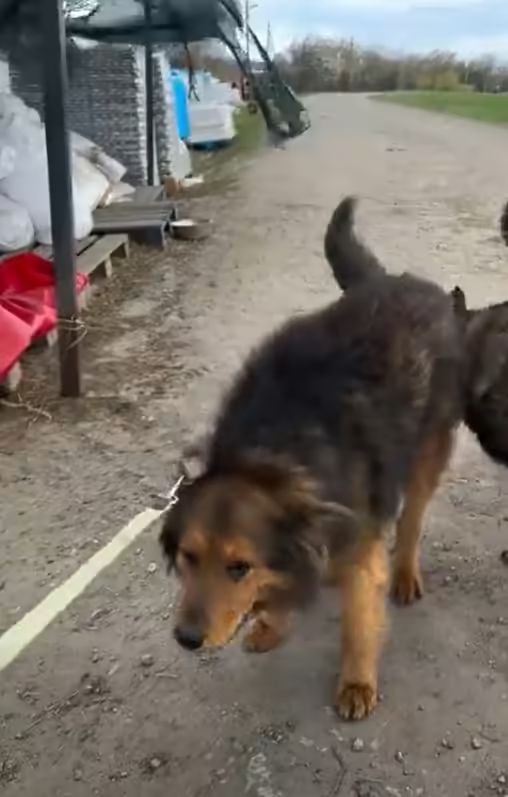
Humane education is the slowest programme we run and the only one that reduces the number of animals needing rescue in the first place. Its results appear years later, in shelters that stay half empty and in yards where the neighbourhood cats are already sterilised.
Three programmes
-
School sessions
Forty minutes with one class: how to read an animal's body language, what to do with a stray on the way home, and why you never chase a frightened dog.
-
Community workshops
Sterilisation, vaccination and feeding for people who already care for street animals in their yard, run with the local sterilisation centre.
-
Volunteer training
Handling, transport, hygiene and record keeping for new volunteers, so that help does not create work for the shelter that receives it.
What responsible pet ownership means in practice
We teach this list rather than a set of slogans, because every item removes a real reason animals end up in shelters.
- Sterilisation before the first accidental litter, not after the third one.
- Vaccination and parasite treatment on a schedule, written down somewhere you will find it.
- Identification that works without a database: a tag with a phone number, plus a chip.
- A plan for the animal if you move, lose your job or have to leave in a hurry.
- Choosing an animal for the life you have, not the life you imagine having next year.
The children who ask the most difficult questions in these sessions are usually the ones who already feed a dog on the way to school. They do not need convincing, they need to be told what to do next.
For teachers and community groups
Do you charge for school sessions?
No. Sessions in partner regions are free, and materials are provided. We ask only that a teacher stays in the room and that the class is not larger than thirty children.
Can you run a session online?
Yes, and we do for schools outside the regions where our coordinators travel. It works less well than a live session, but it is far better than nothing.
Do you bring animals into schools?
No. It stresses the animal and teaches the wrong lesson about animals as entertainment. We bring photographs, equipment and, where possible, a veterinarian.
Bring a session to your school
Tell us the region, the age group and the number of classes, and we will tell you what we can cover this term.