
A room for a few weeks, and the shelter breathes
Support for foster carers is the part most organisations forget. Food, veterinary bills and advice come from us, so the only thing you provide is space and routine.
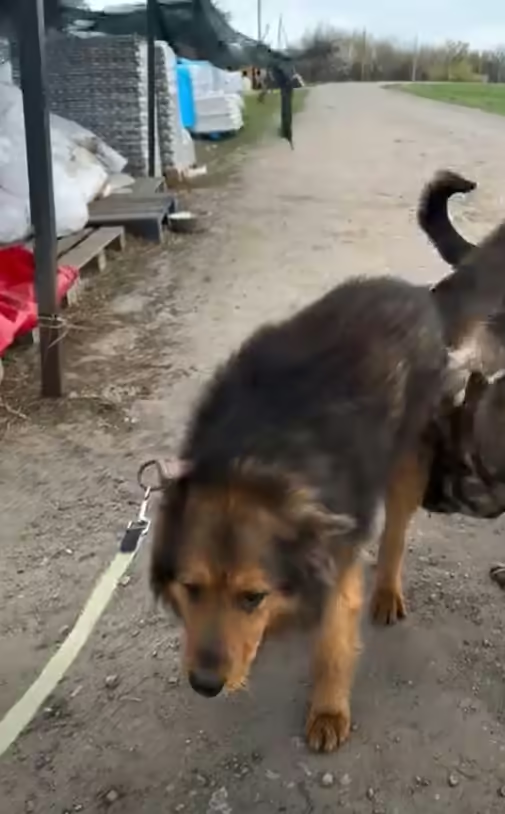
A shelter with ten foster carers can take ten more animals from an evacuation without building anything. That is the cheapest capacity in the whole network, and the only one that arrives with a sofa and a name.
Three kinds of foster care
-
Recovery foster care
An animal after surgery needs a quiet room, medication on time, and short controlled walks on a lead. Usually three to six weeks.
-
Emergency foster placement
A place for an animal that arrives at night, after an evacuation or a raid, when the shelter is already full. Often only a few days.
-
Long stay foster care
For animals unlikely to be adopted quickly: elderly cats, dogs in wheelchairs, animals still learning to trust people.
What we cover, so you do not have to
- Food and litter, either delivered or reimbursed against receipts.
- All veterinary treatment at a partner clinic, arranged and paid for by the foundation.
- Crate, bedding, lead and any medication the animal needs.
- A named coordinator you can call, including out of hours in the first week.
- Transport to and from the clinic if you cannot drive the animal yourself.
How it goes, week by week
- Day 0
The animal arrives with its file, its medication and the equipment it needs. Keep it in one room, no visitors, no other pets.
- Days 1 to 3
Decompression. Most animals eat little and hide. This is normal and not a sign that the placement has failed.
- Week 1
First clinic check. Routine settles: same feeding times, same walk route, same people.
- Weeks 2 to 4
The animal starts behaving like itself. Your notes on it become the description an adopter reads.
- Handover
To an adopter or back to the shelter, with the file and your notes. You are told where it went.
Questions foster carers ask
What if I get attached and want to keep the animal?
It happens often and it is not a problem. Foster carers have first refusal on adoption, with the standard checks.
What if it does not work out?
Call the coordinator and we collect the animal. Nobody is expected to keep an animal that is dangerous to a child, another pet or themselves.
Can I foster a rescue dog if I work full time?
For recovery cases, often yes, because the animal mostly sleeps. For puppies and dogs with separation anxiety, no.
Do I need experience?
For an emergency placement, no. For medical placements with drains, injections or wheelchair care, we ask for previous experience or a training session first.
Offer a room
Tell us your city, whether you have other animals, and how long you could take one. That is enough to start.