
Sterilisation is the only thing that makes rescue finite
A tnr program is unglamorous arithmetic: every unsterilised female on a street means dozens of animals in shelters within two years.
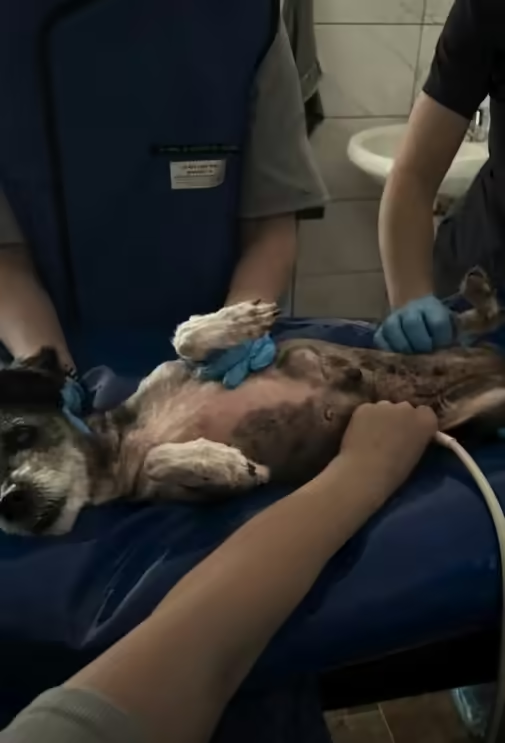
Ukraine currently has around 510 facilities keeping animals, including sterilisation centres, and roughly 45 000 dogs and cats in shelters receiving professional veterinary care. Those numbers only fall when sterilisation runs faster than reproduction, and at present it does not.
How a trap neuter return programme actually runs
Trap neuter return works when it is done to a whole area rather than to individual animals. The team maps a district, works with the people who already feed the animals there, and sterilises as close to every animal as it can reach over several weeks. Animals are vaccinated, ear tipped so they are not caught twice, and returned to the exact place they came from.
Done in one district properly, the population stops growing within a year. Done as a scattered campaign across a city, it changes nothing at all, which is why we fund districts rather than gestures.
Cost per animal
These are clinic prices in the partner network. Feeding, transport and the catching team are on top.
| Procedure | Cost | Notes |
|---|---|---|
| Sterilisation of a cat | 25 to 35 euro | Plus vaccination and parasite treatment |
| Sterilisation of stray dogs | 40 to 70 euro | Depends on size and condition |
| Vaccination and deworming | 3 to 6 euro | Done during the same anaesthesia |
| Ear tip marking | included | Identifies a sterilised animal at a distance |
| Aftercare place for 7 days | 20 to 40 euro | For animals that cannot recover outdoors |
Treatment alongside the programme
Animals caught for sterilisation regularly turn out to need treatment first. That is a feature of the programme, not a distraction from it.
-
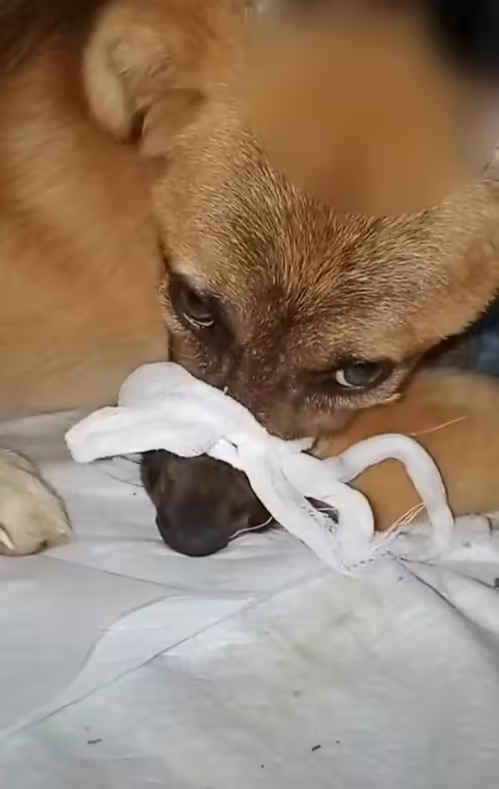
Stabilisation before anything else -
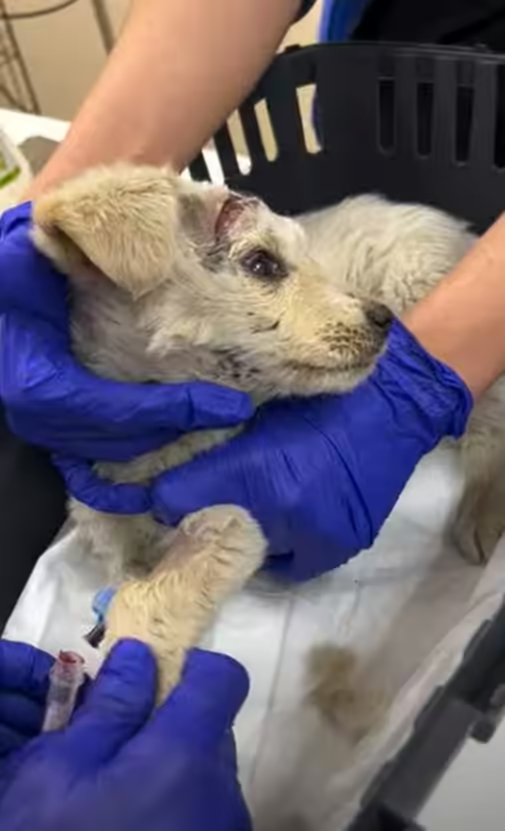
Wound treatment during intake -
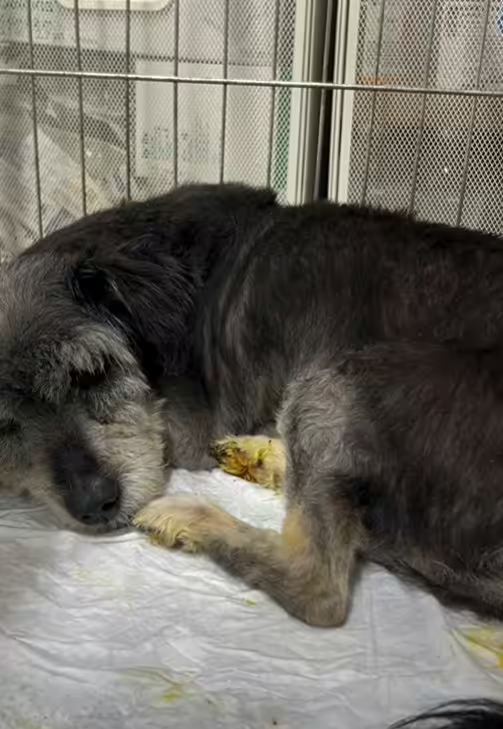
Recovery room -
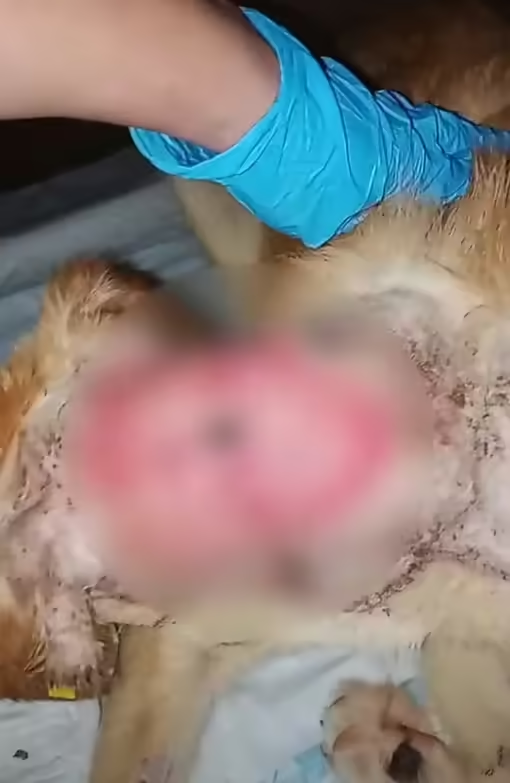
Wound care, image blurred at the shelter's request
What we will not do
Population control attracts bad methods. These are the lines we do not cross, and we drop partners who do.
- No culling, poisoning or removal of healthy animals from their territory.
- No sterilisation without pain relief, sterile instruments and a recovery place.
- No release of an animal that is sick, pregnant late in term or too weak to survive outside.
- No catching by people who have not been trained to handle frightened animals.
- No programme without the people who feed the animals locally, because they know every animal in the yard.
Questions about sterilisation
Why return animals to the street at all?
Because shelters are full and a sterilised, vaccinated animal in a known territory is safer than a removed one, whose place is taken within weeks by an unsterilised newcomer.
How do I help stray animals in my own yard?
Start with sterilisation of the females, then vaccination, then feeding at fixed times in a fixed place. If you tell us the district, we will connect you with the nearest partner clinic.
What about community cat program work in winter?
Sterilisation continues, with a longer indoor recovery. Feeding stations and insulated boxes matter more in January than any campaign.
Is spay and neuter surgery risky for street animals?
The risk is real but small, and far smaller than the risk of repeated pregnancies outdoors. Every animal gets a pre-operative check, and weak animals are treated and fed up first.
Pay for a specific number of animals
Fund the boring solution
Sterilisation raises less money than a rescue photograph and prevents more suffering than any other line in our budget.